Everyone seems to have a tip for whiter teeth. Rub baking soda on them. Squeeze a lemon. Swish coconut oil. Brush with black powder. These tips are cheap and easy, and your friends or family may swear by them. But some of them do very little, and a few can slowly damage your teeth.
In this guide, we explain in simple words what dental research says about each option, how professional whitening works, and how to choose what is right for your teeth.
Where this advice comes from: Most of the facts here come from the American Dental Association (ADA). The ADA is a large association of dentists in the United States. It collects and explains dental research so that patients can trust the advice. We also use the Cochrane review, a respected study that combines the results of many clinical trials.
Is Professional Teeth Whitening Better Than Home Remedies?
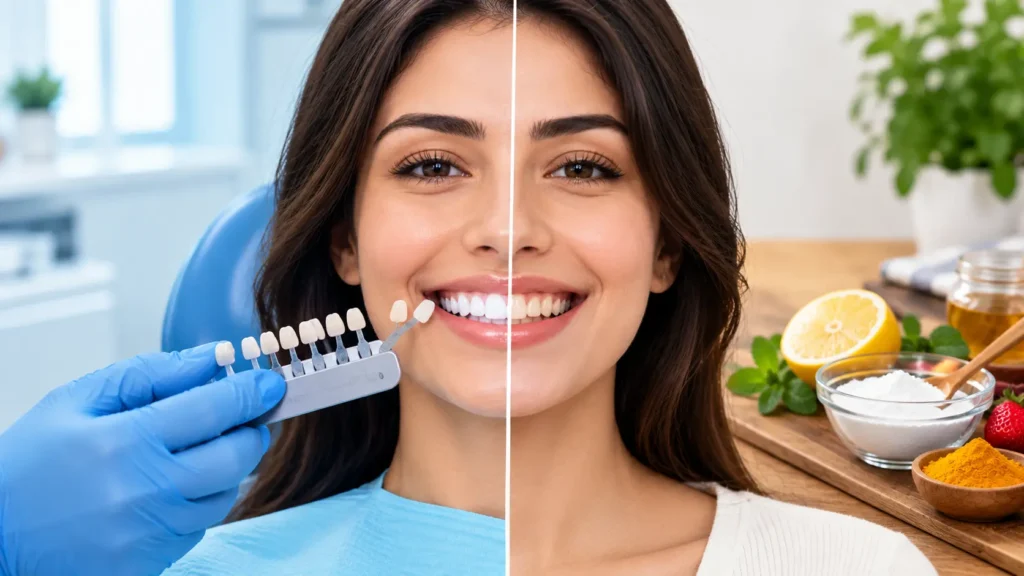
Yes, for most people. Professional whitening uses a bleaching gel that is proven to make teeth lighter, and a dentist keeps the treatment safe. Baking soda, lemon, charcoal and oil pulling have little or no proof of real whitening, and some can harm your enamel (the hard outer layer of your teeth).
Why Do Teeth Turn Yellow or Stained?
Teeth lose their colour for different reasons. The reason decides which treatment will work.
Stains on the surface and stains inside the tooth
There are two main types:
- Surface stains sit on the outside of the tooth. Chai, coffee, cola, smoking, sheesha, paan and naswar are common causes.
- Inside stains are deeper, within the tooth. They can come from ageing, too much fluoride while the teeth were forming, some antibiotics taken in childhood, or a damaged tooth.
Many people have a mix of both.
Why teeth can look yellow even if you brush every day
The hard outer layer of the tooth is called enamel. It is a little see-through, and it gets thinner as we age. Under it is a yellower layer called dentin. When enamel gets thin, the yellow shows more. Brushing removes plaque and some surface stain, but it cannot change the colour inside the tooth.
How Does Professional Teeth Whitening Work?
Dentists use a bleaching gel made with peroxide (carbamide peroxide or hydrogen peroxide). The ADA explains that the gel goes into the tooth and breaks down the coloured particles inside it. So the tooth really changes colour. This is different from scrubbing the surface.
Whitening at the clinic
The dentist puts the gel on your teeth and protects your gums. Sometimes a special light is used. Many dentists also clean off surface stains first.
Whitening at home with a dentist’s trays
The dentist makes trays that fit your teeth exactly. You wear them at home with professional gel. Because the trays fit well, the gel stays away from your gums.
What the dentist checks first
Before whitening, a good dentist checks the cause of the colour, cavities, gum health, cracks, old fillings and crowns, and any past sensitivity. This step matters, because the right treatment depends on what is causing the stain.
Do Home Whitening Remedies Work?
The ADA says that popular home remedies have very little research behind them. Here is each one, in simple terms.
Baking soda
Baking soda is slightly rough, so it can help scrub off some surface stain, especially in toothpaste. It does not bleach teeth, and it will not change the natural colour of your teeth.
Lemon juice and other sour fruits
There is no good proof that lemon whitens teeth. The ADA also questions how safe these remedies are. Lemon is acidic, and acid can soften enamel. Teeth may look brighter for a short time only because they are dry or slightly worn, and that is not true whitening.
Strawberries with baking soda
In a laboratory study, this mix did not whiten teeth in any measurable way. It is popular online, but the proof is weak.
Charcoal powder and charcoal toothpaste
The ADA says there is not enough proof that charcoal whitens teeth safely. Charcoal can also scratch enamel. In one study, a charcoal and salt mix wore away enamel, and the teeth looked more yellow because the yellow layer underneath showed through.
Coconut oil pulling
There is no proof that oil pulling whitens teeth. The ADA also notes that it has caused problems such as stomach upset, and in rare cases a lung illness when oil was breathed in by mistake.
Whitening toothpaste
Most whitening toothpastes only remove light surface stains. Some have a little peroxide, but not much. They suit mild staining, not deep colour change.
Whitening strips from a pharmacy
Strips contain peroxide, so they do bleach, but at a lower strength than a dentist’s gel. They are usually cheaper but slower. In one study, a pharmacy-type product took 16 days to reach the result that a dentist’s home trays gave in 7 days and the clinic treatment gave in one visit. Choose a product approved by a dental association where you can, and follow the instructions.
Why do home remedies seem to work? Scrubbing can polish the surface a little, and dry teeth can look lighter for a while. This is not the same as real whitening.
Professional Whitening vs Home Remedies: A Simple Comparison
| Professional whitening | Pharmacy strips and whitening toothpaste | Home remedies (baking soda, lemon, charcoal, oil) | |
|---|---|---|---|
| Does it lighten teeth? | Yes, can lighten both surface and inside stains | Strips can; toothpaste only lifts surface stain | Little or no proof |
| How strong is the proof? | Strong, many studies | Fair | Weak, small or lab studies only |
| How fast? | Fastest, sometimes one visit | Days to weeks | Usually none |
| Safety | Temporary sensitivity and gum irritation are most common | Same, usually milder | Can wear down enamel |
| Cost | Highest at the start | Lower | Cheapest, but damage can cost more later |
| Dentist check needed? | Yes, part of the treatment | Recommended | Strongly advised |
No method is perfect for everyone. Whitening does not change fillings, crowns or veneers, and some deep stains only improve a little.
Can Home Remedies Damage Your Enamel?
Some can, in two ways:
- Acid: lemon juice and vinegar can soften enamel.
- Scratching: hard scrubbing with charcoal, salt or baking soda paste can wear enamel away over time.
Enamel does not grow back. Once it is gone, the yellow layer underneath shows, and your teeth can also become more sensitive. Peroxide products can irritate gums too, especially when trays fit badly or gel touches the gums.
Is Professional Whitening Safe for Sensitive Teeth?
For many people it is, but you need a check first. The most common side effects of whitening are mild, short-lived tooth sensitivity and gum irritation. Sensitivity can affect many people at the start of treatment, and it usually settles within a few days after finishing.
The important thing is to tell normal whitening sensitivity from a real problem. A short twinge during treatment is expected. Sharp pain or pain that does not go away with hot or cold drinks may mean a cavity, a crack or an exposed root. If this sounds like you, read about why teeth hurt when eating or drinking something hot or cold and get it checked before you whiten. Your dentist can change the gel strength or timing, or suggest a product for sensitive teeth.
Who Should See a Dentist Before Whitening?
Whitening is only cosmetic. It does not treat cavities, infection or gum disease. Bleaching a problem tooth can make things worse. See a dentist first if you have:
- Toothache or pain with no clear reason. Whitening will not fix it. Read about the common causes of toothache to understand what may be happening.
- Cavities, cracks or worn enamel.
- Bleeding, swollen or receding gums.
- Strong sensitivity.
- Fillings, crowns, veneers or implants. Only natural teeth change colour, so these can end up looking different from the rest.
- One dark tooth, or a colour change with no clear reason.
A full check-up can also find problems you cannot feel yet. For example, pain at the back of the mouth should not be ignored. This guide on wisdom teeth symptoms and when to see a dentist explains when it needs attention. Wisdom teeth do not make all your teeth yellow. The point is to find any dental problem before you start a cosmetic treatment.
Children and teenagers: the American Academy of Pediatric Dentistry advises against whitening all the teeth of young children and teens whose teeth are still developing. Young people should see a dentist for advice that suits their age.
How Long Do Whitening Results Last?
It is different for every person, so no honest clinic can promise an exact time. Results depend on how much chai, coffee, cola or tobacco you have, how well you clean your teeth, the type of stain, and how your teeth respond. Stains from tea, coffee and smoking slowly return. Some people have a top-up now and then, after talking to their dentist.
How Much Does Teeth Whitening Cost in Islamabad?
There is no single price. Anyone who gives you a number without seeing your teeth is guessing. The cost usually depends on:
- The method: at the clinic, with home trays, or both.
- The first check-up and any X-rays.
- Whether you need a cleaning or other dental treatment first.
- The number of visits and any products for after treatment.
The best way to know your cost is to ask the clinic for a quotation after your consultation. When you compare, remember that repeated pharmacy products add up, and so does the cost of fixing damage from harsh home methods.
How to Keep Your Teeth Cleaner and Brighter
These habits help keep your smile fresh. They will not change stains that are inside the tooth.
- Brush twice a day with fluoride toothpaste, and clean between your teeth every day.
- Rinse your mouth with water after chai, coffee, cola or other dark drinks.
- Avoid tobacco, including cigarettes, sheesha, paan and naswar.
- Get regular check-ups and cleanings. A professional cleaning removes surface stain.
- If you use whitening toothpaste, do not scrub hard.
When Should You Book a Dental Consultation?
If nothing hurts and you only want a brighter smile, that is a cosmetic wish, and a consultation will help you choose a safe option. Book sooner if you notice:
- Pain, sensitivity or swelling.
- One tooth turning dark.
- Bleeding gums or bad breath that does not go away.
- A sudden change in colour.
- A colour change after an injury to the tooth.
These can mean there is a problem under the surface, and whitening will not solve it.
Frequently Asked Questions
Is professional teeth whitening better than home remedies?
Usually, yes. It uses a bleaching gel that studies show works, while home remedies have little proof and some can harm enamel. Whether it suits you depends on your teeth.
Can baking soda whiten teeth safely?
Baking soda in toothpaste can help remove some surface stain. It does not bleach teeth. A rough homemade paste used often can scratch enamel.
Does lemon juice whiten teeth or damage enamel?
There is no good proof that it whitens, and its acid can soften enamel. It is better to avoid it.
Is charcoal toothpaste good for whitening?
The ADA says there is not enough proof that charcoal whitens teeth safely. It can also be rough on enamel.
What is the safest way to whiten yellow teeth?
First, see a dentist to find the cause. Then choose a treatment supervised by a dentist, or a pharmacy product approved by a dental association, used exactly as directed.
Can whitening make sensitive teeth worse?
Mild, short sensitivity is common with any peroxide whitening. If your teeth are already sensitive, get them checked first so the treatment can be adjusted.
How long do professional whitening results last?
It varies. Your diet, tobacco use and cleaning habits all matter. Ask your dentist what to expect in your case.
Can I whiten teeth with crowns, veneers or fillings?
Bleach only changes natural teeth. Crowns, veneers and fillings stay the same colour, so your dentist should plan around them.
What should I do if my teeth hurt before whitening?
Do not whiten. See a dentist first, because pain can mean decay, infection or a crack.
Is teeth whitening available in Islamabad?
Yes. Dentists in Islamabad offer professional whitening. Lumino Dental & Aesthetic Clinic is in F-8, Islamabad, and a consultation is the best first step. The team can check your teeth and explain which options, if any, suit you.
Book a Check-Up at Lumino, F-8 Islamabad
A brighter smile is a fair goal, and you do not have to guess your way there. If you are thinking about whitening, visit Lumino Dental & Aesthetic Clinic in F-8, Islamabad. The team can look at why your teeth have changed colour and explain what will and will not help.
This article gives general information. It does not replace a dental check-up.