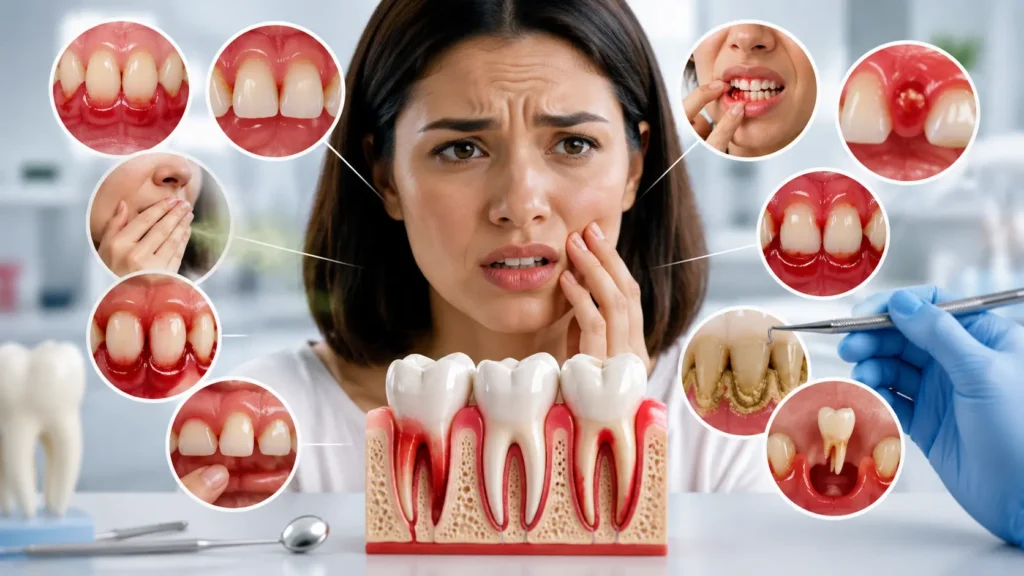
The earliest warning signs of gum disease are bleeding gums when brushing or flossing, red or swollen gums, persistent bad breath, and gums that feel tender to the touch. As the disease progresses, you may notice gum recession, loose teeth, or pus near the gumline. Gingivitis, the early stage, is fully reversible with professional cleaning and consistent oral hygiene — but waiting too long allows it to progress into periodontitis, which causes permanent bone loss.
Your gums rarely stay quiet when something is wrong. A little blood in the sink after brushing, a dull ache along the gumline, breath that doesn’t freshen up no matter how often you brush — these are not small annoyances. They’re your body’s early warning system for gum disease, one of the most common oral health problems worldwide and a leading cause of adult tooth loss.
The tricky part is that gum disease is often painless in its earliest stage, so many people dismiss the signs until the damage becomes harder to reverse. The good news: when caught early, gum disease is highly treatable, and in its first stage, completely reversible.
This guide walks through the 10 warning signs of gum disease you should never ignore, what causes them, how dentists diagnose and treat the condition, and when it’s time to book an appointment at a dental clinic in Islamabad. Whether you’re noticing your first symptom or trying to understand a diagnosis you’ve already received, you’ll find clear, medically grounded answers here.
What Is Gum Disease?
Gum disease is an inflammatory condition caused by bacteria in dental plaque that irritate and infect the gum tissue. It progresses in two stages: gingivitis, a mild and reversible inflammation, and periodontitis, an advanced stage that damages the bone and ligaments holding teeth in place.
Left untreated, this inflammation spreads below the gumline, breaking down the connective tissue and bone that anchor your teeth. At that point, gingivitis has progressed into periodontitis — a condition the CDC and NIDCR recognize as one of the most common chronic conditions affecting American and global adult populations alike.
Why Early Detection Matters
Early detection matters because gingivitis is reversible, while periodontitis is not. Catching gum disease before it progresses means you can restore your gums to full health with a professional cleaning, rather than needing ongoing periodontal treatment to manage permanent bone loss.
In the United States, CDC surveillance data shows that roughly four in ten adults aged 30 and older have some degree of periodontitis, with rates rising sharply after age 65. Large-scale, population-specific surveillance data for Pakistan is limited, but periodontitis is recognized globally as one of the most common chronic conditions in adults, and clinicians in Islamabad routinely see the same late-stage presentations that delayed treatment causes elsewhere — patients who noticed bleeding gums years earlier but didn’t act on it.
The earlier you recognize the warning signs below, the more treatment options you’ll have — and the more of your natural teeth and gum tissue you’ll keep long-term.
10 Warning Signs of Gum Disease You Should Never Ignore
Some of these signs appear early and mildly. Others signal that gum disease has already progressed. If you recognize even one or two of these on this list, it’s worth having your gums professionally examined.
1. Bleeding Gums When You Brush or Floss
Bleeding gums during brushing or flossing is usually the first and most common sign of gum disease. Healthy gums do not bleed with normal brushing pressure.
A little pink in the sink is easy to brush off, literally. But bleeding gums are a direct sign of inflammation caused by plaque buildup along the gumline. It’s not caused by brushing too hard — it’s caused by gums that are already irritated and inflamed.
2. Red, Swollen, or Tender Gums
Gums that look red instead of a healthy pale pink, or feel puffy and tender to the touch, indicate active inflammation from gum disease.
Healthy gum tissue is firm and fits snugly around each tooth. When bacteria irritate the tissue, blood flow increases, causing the redness and swelling associated with gingivitis. Tenderness when eating or brushing often accompanies this stage.
3. Persistent Bad Breath (Halitosis)
Chronic bad breath that doesn’t improve with brushing, mouthwash, or mints is often caused by bacteria and toxins released by gum disease, not just food odor.
Oral bacteria produce sulfur compounds as a byproduct of breaking down food particles and tissue. When gum disease is present, these bacteria multiply in the pockets between your teeth and gums, producing an odor that’s difficult to mask and tends to return quickly.
4. Gum Recession (Teeth Looking Longer)
Gum recession happens when the gum tissue pulls away from the tooth, exposing more of the tooth’s root and making teeth appear longer than before.
Recession is a sign that gum disease has already caused some tissue loss. It also exposes the root surface, which lacks the protective enamel covering the crown, often leading to noticeable sensitivity to hot, cold, or sweet foods.
5. Loose or Shifting Teeth
Teeth that feel loose or have visibly shifted position are a sign of advanced gum disease, where bone and ligament support around the tooth root has been lost.
This is one of the more serious warning signs, typically associated with periodontitis rather than early gingivitis. Once the bone supporting a tooth deteriorates, the tooth can drift out of alignment or, if untreated, eventually be lost.
6. Pus Between Teeth and Gums
Pus appearing at the gumline is a sign of active infection and typically indicates a periodontal abscess, which requires prompt dental treatment.
This symptom should never be ignored. Pus signals that bacteria have overwhelmed the tissue’s ability to fight the infection locally, and it’s often accompanied by throbbing pain, swelling, or a foul taste in the mouth.
7. Pain While Chewing
Discomfort or pain while chewing can indicate that gum disease has affected the stability of a tooth or the health of the tissue supporting it.
As supporting bone and tissue weaken, biting pressure that was once comfortable can become painful. This is often mistaken for a cavity or cracked tooth, which is exactly why a professional exam is necessary to identify the real cause.
8. Sensitive Teeth
New or worsening tooth sensitivity, especially near the gumline, often results from gum recession exposing the root surface, a common consequence of gum disease.
Sensitivity that develops gradually, particularly if it’s localized to certain teeth or is worse near the gumline, is frequently linked to recession rather than enamel wear alone.
9. Changes in Bite or Tooth Alignment
A bite that suddenly feels different, or teeth that no longer meet the way they used to, can signal that gum disease has caused shifting due to bone loss.
This change is often subtle at first — a slight gap where teeth used to touch, or a filling that suddenly feels high. It’s worth mentioning to your dentist even if it seems minor, since bite changes rarely reverse on their own.
10. Gaps Forming Between Teeth
New spaces forming between teeth that weren’t there before are frequently caused by gum disease-related bone loss allowing teeth to drift apart.
Unlike naturally spaced teeth, gaps that appear over time in adulthood are a red flag. They typically indicate that the bone and ligament structure holding teeth close together has started to break down.
Risk Factors for Gum Disease
The biggest risk factors for gum disease are poor oral hygiene, smoking, diabetes, pregnancy-related hormonal changes, certain medications, genetics, and nutritional deficiencies such as low vitamin C.
- Poor oral hygiene: infrequent brushing and flossing allows plaque to build up and harden into tartar
- Smoking and tobacco use: significantly increases risk and slows healing after treatment
- Diabetes: poorly controlled blood sugar impairs the immune response and increases infection risk
- Pregnancy: hormonal shifts increase blood flow to the gums, making them more prone to inflammation
- Certain medications: some drugs reduce saliva flow, which naturally helps clear bacteria
- Genetics: some people are more genetically susceptible to periodontal disease regardless of hygiene habits
- Vitamin C deficiency: weakens connective tissue and gum resilience
- Chronic stress: linked to weakened immune response and higher inflammation levels
Who Is Most at Risk
Adults over 30, smokers, people with uncontrolled diabetes, pregnant women, and those with a family history of gum disease face the highest risk of developing periodontitis.
Age is one of the strongest predictors — prevalence rises sharply after 30 and continues climbing with each decade. But age alone doesn’t tell the full story: someone in their 20s who smokes and has uncontrolled diabetes may face a higher risk than a non-smoking 50-year-old with well-managed health and consistent dental visits.
How Dentists Diagnose Gum Disease
Dentists diagnose gum disease through a clinical gum examination, measuring pocket depth around each tooth with a periodontal probe, checking for bleeding and recession, and reviewing dental X-rays to assess bone levels.
A comprehensive periodontal exam typically includes:
- Visual inspection of gum color, texture, and swelling
- Probing depth measurement — healthy pockets measure 1–3mm; deeper pockets suggest disease
- Checking for bleeding on probing, a key inflammation marker
- Dental X-rays to evaluate bone level around the roots
- Assessing tooth mobility and bite alignment
This exam is quick, non-invasive, and gives your dentist a precise picture of whether you have gingivitis, periodontitis, or healthy gums.
Treatment Options
Gum disease treatment ranges from professional teeth cleaning for gingivitis to scaling and root planing (deep cleaning) for periodontitis, with antibiotics or periodontal surgery reserved for more advanced or persistent cases.
| Factor | Gingivitis (Early Stage) | Periodontitis (Advanced Stage) |
|---|---|---|
| Gum Appearance | Red, swollen, may bleed easily | Deep red or purple, receding, pus may be present |
| Bone & Tissue Damage | None yet — reversible | Bone and ligament loss — not fully reversible |
| Tooth Stability | Teeth remain firmly in place | Teeth may loosen or shift |
| Typical Treatment | Professional cleaning, better oral hygiene | Scaling and root planing, possibly surgery |
| Reversible? | Yes, with prompt care | Damage is managed, not reversed |
For gingivitis, a professional cleaning to remove plaque and tartar, combined with improved daily brushing and flossing, is often enough to fully restore gum health. For periodontitis, scaling and root planing — a deep cleaning that removes bacteria and smooths the tooth root below the gumline — is the standard first-line treatment. In more advanced or unresponsive cases, your dentist may recommend localized antibiotics, laser therapy, or periodontal surgery to reduce pocket depth and support tissue reattachment.
Can Gum Disease Be Reversed?
Gingivitis, the early stage of gum disease, can be fully reversed with professional cleaning and consistent oral hygiene. Periodontitis, the advanced stage, cannot be fully reversed because bone loss is permanent, but its progression can be stopped and managed with treatment.
This is the single most important distinction in gum disease: timing determines the outcome. A patient who addresses bleeding gums within weeks of noticing them can often return to full gum health. A patient who ignores the same symptom for years may need lifelong periodontal maintenance to prevent further bone loss and tooth loss.
How to Prevent Gum Disease
Preventing gum disease relies on consistent oral hygiene, twice-yearly professional cleanings, avoiding tobacco, managing conditions like diabetes, and eating a balanced diet that supports gum tissue health.
- Brush twice daily for two minutes using a fluoride toothpaste
- Floss daily to remove plaque between teeth where a brush can’t reach
- Schedule professional teeth cleaning and a dental examination every six months
- Avoid smoking and tobacco products
- Manage blood sugar levels if you have diabetes
- Eat a balanced diet with adequate vitamin C to support gum tissue
- Replace your toothbrush every three months or after illness
- Address teeth grinding or clenching, which can worsen gum and bone stress
When to See a Dentist
See a dentist promptly if you notice bleeding gums that don’t improve within a week, persistent swelling, loose teeth, pus at the gumline, or bad breath that doesn’t resolve with normal oral hygiene.
See a dentist right away if you notice:
- Gums bleeding regularly, even with gentle brushing
- Swelling, redness, or pain that doesn’t improve
- Pus or a bad taste near the gumline
- A tooth that feels loose or has shifted position
- A sudden change in how your teeth bite together
Don’t wait until symptoms become severe. Most cases of gum disease that progress to tooth loss started as symptoms the person noticed but delayed addressing. A same-week consultation for early symptoms is far simpler, faster, and less costly than periodontal treatment for advanced disease.
Why Choose Lumino Dental & Aesthetics Clinic
At Lumino Dental & Aesthetics Clinic in Islamabad, our team combines experienced, dedicated dentistry with modern dental technology to catch gum disease early and treat it effectively. We take a personalized dental care approach, meaning your treatment plan is based on your specific gum health, risk factors, and goals — not a generic protocol.
Our clinic offers comprehensive periodontal examinations, professional cleanings, and scaling and root planing for patients across Islamabad, including those near F-8 Markaz and D-12. We also provide emergency dental care for patients experiencing sudden swelling, pain, or bleeding that can’t wait for a routine appointment. If you’re weighing your options for a trustworthy provider, our guide on choosing the right dental clinic in Islamabad walks through what to look for in a practice you can rely on long-term.
Beyond gum health, our full range of dental services and aesthetic services means your smile is cared for holistically, from prevention through to cosmetic refinement, all under one roof.
Final Thoughts
Gum disease is common, but it isn’t something to accept as normal. Bleeding gums, persistent bad breath, or gums that look different than they used to are your body telling you something needs attention — and in the earliest stage, that attention can fully undo the damage.
Please don’t try to diagnose or treat gum disease on your own based on symptoms alone. A professional dental examination is the only reliable way to know whether you’re dealing with gingivitis, periodontitis, or something else entirely, and to build a treatment plan around your specific case.
Protect Your Smile Today
Noticing bleeding, swollen, or tender gums? Don’t wait for the symptoms to get worse. Book an oral health assessment at Lumino Dental & Aesthetics Clinic and let our experienced dentists give you a clear, personalized path back to healthy gums.
📅 Book Appointment | 📍 Visit Our Clinic | ☎️ Call Today
Explore our full range of dental services to see how we treat gum disease and other oral health concerns, or browse our aesthetic services if you’re also considering a smile refresh once your gum health is restored.
Not sure which clinic to trust with your care? Ready to protect your smile? Contact us today to book your gum health assessment.
Frequently Asked Questions
Can gum disease go away on its own?
Gingivitis, the earliest stage, can improve with better oral hygiene alone, but it heals fastest and most completely with a professional cleaning. Periodontitis does not go away on its own and requires professional treatment.
Is bleeding gums serious?
Bleeding gums are always worth taking seriously. While a single episode may be minor, gums that bleed regularly during brushing or flossing are a clear sign of active gum inflammation that needs evaluation.
What does early gum disease look like?
Early gum disease, or gingivitis, typically looks like red or puffy gums that bleed easily during brushing or flossing, without any looseness of the teeth or gum recession.
Can gum disease cause bad breath?
Yes. Bacteria involved in gum disease release sulfur compounds that cause persistent bad breath, which often doesn’t improve with mouthwash or mints alone.
Can gum disease be cured?
Gingivitis can be fully cured with professional cleaning and improved oral hygiene. Periodontitis cannot be completely cured, since bone loss is permanent, but it can be effectively managed and its progression stopped.
How painful is gum disease?
Early gum disease is often painless, which is why it’s frequently missed. Advanced periodontitis can cause tenderness, pain while chewing, and discomfort from loose teeth or gum abscesses.
How quickly does gum disease progress?
Progression varies by individual, but untreated gingivitis can advance to periodontitis within a matter of months to a few years, especially in people with risk factors like smoking or diabetes.
Can children get gum disease?
Yes, children can develop gingivitis, usually linked to inadequate brushing or flossing. Periodontitis is rare in children but can occur, particularly with certain underlying health conditions.
Can diabetes make gum disease worse?
Yes. Diabetes, especially when poorly controlled, impairs the body’s ability to fight infection, making gum disease more likely to develop and progress more quickly.
When should I visit a dentist for bleeding gums?
Visit a dentist if bleeding gums persist for more than a week despite consistent brushing and flossing, or sooner if you notice swelling, pain, or a bad taste alongside the bleeding.