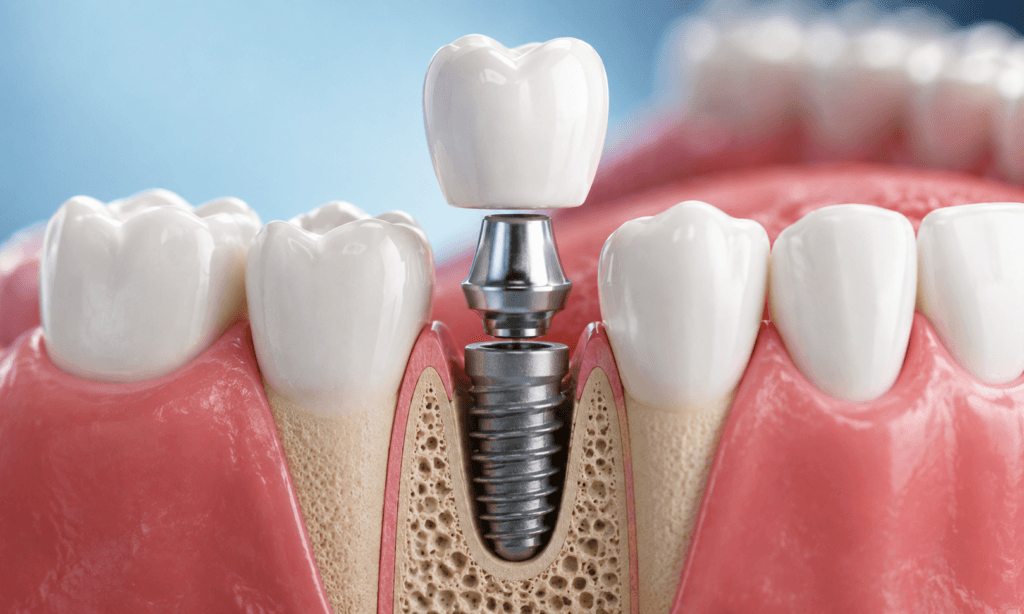
Dental implant placement is typically performed under local anesthesia, which numbs the treatment area and helps prevent sharp pain during the procedure. You may still feel pressure, vibration or movement while the dentist works. Once the anesthesia wears off, mild soreness, swelling or tenderness is common for a few days. Discomfort varies according to the number and location of implants, the complexity of treatment, whether bone grafting is needed, and individual healing. Your dentist will provide aftercare and pain-management instructions specific to your procedure.
Is Dental Implant Surgery Painful?
Before the implant is placed, the treatment area is numbed with local anesthesia. The local anesthetic temporarily blocks pain signals from the treatment area, so sharp pain should generally be prevented during implant surgery. You may instead notice pressure or vibration as the dentist prepares the jawbone and places the implant.
Some patients feel very little beyond pressure, while others may experience some discomfort, particularly during more complex procedures. If you feel pain during treatment, tell your dentist so the anesthesia can be checked and adjusted if needed. A completely painless experience cannot be guaranteed for every patient, but modern anesthesia and careful treatment planning make implant surgery manageable for many people.
What Happens Before Dental Implant Surgery?
Before treatment, your dentist examines your teeth, gums and jawbone. This may include dental X-rays or 3D imaging to assess bone volume and plan implant placement. Your medical and dental history, medications and existing oral-health conditions are also considered because they can influence treatment and healing.
This planning stage is important. A detailed assessment helps the dentist determine whether an implant is appropriate, whether additional procedures such as bone grafting may be needed, and how the treatment should be carried out.
What Does Dental Implant Surgery Feel Like?
Numbing the area — Local anesthesia is administered around the treatment site. You may feel a brief pinch or pressure from the injection before the area becomes numb.
Preparing the implant site — The dentist prepares the space in the jawbone for the implant. You may notice vibration, pressure or movement rather than sharp pain.
Placing the implant — The implant is positioned in the prepared site. You may continue to feel pressure or vibration.
After the implant is placed — The treatment area is closed as needed, and numbness may continue for several hours after the appointment. Follow your dentist’s instructions about eating, drinking and protecting the surgical site while you are numb.
Dental Implant Pain After Surgery
Once the anesthesia wears off, some soreness is expected. Common postoperative experiences can include tenderness around the gum, mild to moderate swelling, minor bleeding and sensitivity when chewing near the surgical site. These symptoms can occur as part of normal healing and do not automatically mean that something has gone wrong.
Use pain-relief medication only as recommended by your dentist or healthcare professional, and follow the aftercare instructions you were given. Avoid touching or disturbing the surgical site and follow the recommended oral-hygiene routine.
How Long Does Dental Implant Pain Last?
There is no single recovery timeline for every patient. The duration and intensity of discomfort can depend on the number of implants, implant location, surgical complexity, whether bone grafting was performed, gum and bone health, and individual healing.
For many patients, noticeable discomfort begins to ease during the first several days and continues improving during the first week. Some tenderness can last longer. Your dentist can give you a more specific expectation based on your treatment.
Dental Implant Pain Timeline
First few hours: Numbness from local anesthesia is common. Follow your dentist’s instructions about eating and drinking while the area remains numb.
First 24–48 hours: Tenderness and swelling may occur. Follow the recommended pain-management and aftercare instructions.
Days 3–5: Symptoms should generally begin settling, although some tenderness can remain.
Around 1 week: Many patients are significantly more comfortable, but recovery varies from person to person.
Following weeks and months: The soft tissues continue to heal while osseointegration — the process by which the jawbone bonds with the implant — takes place over a longer period. The timing of the final restoration depends on your individual treatment plan.
Dental Implant Pain After 3 Days
Mild tenderness or occasional swelling on day three can still occur during normal healing. What matters is the overall direction of your recovery. If pain is becoming more severe rather than gradually improving, or if you develop other concerning symptoms, contact your dentist for an assessment.
Dental Implant Pain After 1 Week
Many patients feel considerably more comfortable by the one-week mark, with swelling and soreness reduced. Healing is not identical for everyone, however. Persistent or worsening pain, significant swelling, fever, unusual discharge or other concerning symptoms should be reviewed by your dentist.
How to Reduce Dental Implant Pain
• Follow your dentist’s postoperative instructions closely.
• Take only the medication recommended or prescribed, exactly as directed.
• Keep your mouth and surgical area clean according to your dentist’s instructions.
• Avoid touching, pressing or disturbing the implant site.
• Choose soft, suitable foods during the early recovery period.
• Avoid smoking because it can interfere with healing.
• Attend scheduled follow-up appointments.
• Contact your dentist promptly if symptoms become worse or unusual.
Does Bone Grafting Make Dental Implants More Painful?
Bone grafting may be recommended when there is insufficient jawbone to support an implant securely. Because it adds an additional surgical step, it can involve its own period of tenderness and recovery.
Not every patient needs bone grafting. Whether it is appropriate depends on your bone volume, anatomy and treatment plan. Your dentist can determine this through an examination and appropriate imaging.
Implant Pain vs Implant Failure
Postoperative discomfort does not automatically mean that a dental implant has failed. Healing can involve soreness and swelling, particularly during the early days after surgery.
However, severe or worsening pain, significant swelling, persistent bleeding, fever, unusual drainage or mobility of the implant should be assessed by a dentist. Symptoms alone cannot confirm implant failure, so professional examination is important if you are concerned.
When Is Dental Implant Pain Not Normal?
Contact your dentist if you experience severe or worsening pain, increasing swelling, persistent bleeding, fever, pus or unusual discharge, implant mobility, or symptoms that are not improving as expected.
These symptoms do not necessarily mean that a serious complication has occurred, but they should be assessed rather than ignored.
Does Everyone Experience the Same Dental Implant Pain?
No. Pain and recovery vary between patients. Factors include the number and location of implants, surgical complexity, whether bone grafting was involved, gum and bone health, general health, and individual pain sensitivity.
Two patients undergoing similar procedures can have different recovery experiences. Your dentist is best placed to explain what is expected in your specific case.
Dental Implant Pain vs Tooth Extraction Pain
Patients often compare dental implant treatment with tooth extraction. Both procedures can cause postoperative soreness, and the experience depends heavily on the tooth, the surgical complexity and the patient’s individual healing response.
In some cases, an implant can be placed at the same appointment as an extraction when clinical conditions are suitable. If a tooth may still be saved, your dentist can assess whether treatment such as root canal therapy is appropriate before recommending extraction and replacement.
Dental Implants vs Other Tooth Replacement Options
Implants are not the only option for replacing a missing tooth. Bridges and dentures are alternatives, each with different advantages, maintenance requirements, costs and long-term considerations.
If your natural tooth is still potentially salvageable, it is worth understanding whether it can be saved before considering extraction and replacement. Your dentist can compare the available options based on your oral health, bone condition and treatment goals.
Dental Implants in Islamabad
If you are exploring dental implants in Islamabad, an in-person examination is the best starting point. Your dentist can assess your gums and jawbone, review appropriate imaging and develop a treatment plan based on your specific condition.
At Lumino Dental & Aesthetics Clinic in F-8 Markaz, Islamabad, dental implant consultations focus on understanding the patient’s individual needs before recommending a treatment plan rather than taking a one-size-fits-all approach.
Concerned about dental implant pain or unsure whether implants are right for you? A consultation can help you understand the procedure, expected recovery and available treatment options based on your dental condition. Contact Lumino Dental & Aesthetics Clinic to discuss your options.
Frequently Asked Questions
Does getting a dental implant hurt?
Dental implant placement is typically performed under local anesthesia, which helps prevent sharp pain during the procedure. You may feel pressure or vibration. Some soreness or tenderness after the anesthesia wears off is common.
How painful is dental implant surgery?
Most patients experience pressure or vibration rather than sharp pain during surgery because the treatment area is numbed. Postoperative discomfort varies by procedure and individual healing.
How long does dental implant pain last?
Noticeable discomfort often begins to ease within the first several days and may be substantially improved within the first week. Some tenderness can last longer depending on the procedure and individual recovery.
Is dental implant surgery painful after anesthesia wears off?
Some soreness, tenderness or mild swelling can occur after the numbness fades. Follow your dentist’s pain-management and aftercare instructions.
Is dental implant pain after 3 days normal?
Mild tenderness or some swelling on day three can still occur during normal healing. Pain that is clearly worsening rather than improving should be discussed with your dentist.
Why does my dental implant hurt after one week?
Some patients may still have tenderness after one week, but worsening or persistent pain should be assessed, particularly if accompanied by swelling, fever, drainage or other concerning symptoms.
How can I reduce dental implant pain?
Follow your dentist’s instructions, take recommended medication as directed, keep the area clean according to instructions, avoid disturbing the site, choose suitable soft foods early on, avoid smoking and attend follow-up appointments.
How long does dental implant recovery take?
Visible soreness and swelling usually improve over days to a couple of weeks, while the bone continues to heal and integrate with the implant over a longer period. Your dentist can provide a timeline specific to your treatment.
Does bone grafting make dental implant treatment more painful?
Bone grafting adds an additional procedure and can involve its own period of tenderness. Not every patient requires it; the need depends on the amount and condition of available jawbone.
When should I contact my dentist about implant pain?
Contact your dentist if pain is severe or worsening, or if you have significant swelling, fever, persistent bleeding, unusual discharge or implant mobility. Prompt assessment is appropriate when symptoms are concerning.